Most people think AI search optimization is a slow game. Set things up, wait six months, maybe see some movement. We thought so too — until we ran a live test for a beauty brand and watched the numbers move in two weeks flat.
No website changes. No schema markup. No technical overhaul. Just one press release and a smart distribution strategy.
Here’s what happened, what the data actually showed, and why the brands that move now will be almost impossible to catch later.
The Shift That’s Already Happening (Whether You’re Ready or Not)
Ask yourself where your customers find products today. You’d probably say Google, Amazon, maybe Instagram or TikTok. And you’d be right — for now.
But the way people search is changing fast. More and more buyers are asking ChatGPT for product recommendations. They’re asking Perplexity which skincare brand to trust. They’re getting answers from Gemini before they’ve even opened a browser tab.
What Happens When Your Brand Isn’t in the Answer?
Simple — someone else gets recommended instead. If a potential customer asks an AI platform “what’s the best vitamin C serum for sensitive skin?” and your brand doesn’t appear in the response, you’ve lost that sale. You didn’t even get a chance to compete.
This is the new front door for product discovery. And right now, almost no brands are optimising for it. That gap is exactly why the window to get ahead is still wide open — but it won’t stay that way for long.
We’ve been talking about this shift for a while. Amazon’s Rufus is changing how products get discovered on-platform. Google’s AI Overviews are reshaping what appears at the top of search results. Agentic commerce — where AI assistants complete purchases on behalf of users — is already in early stages. The infrastructure is being built around your customers right now.
So instead of just talking about it, we decided to test it. We took a beauty brand we work with — seven-figure revenue, strong Amazon presence, solid direct-to-consumer site — and ran a controlled experiment. The goal: get this brand visible across the major AI platforms and measure what actually moved.
What happened in the first two weeks surprised us.
What We Did: One Press Release, 581 Media Placements
Why Traditional PR Thinking Misses the Point
When most people hear “press release,” they think old-school media outreach. Send something out, cross your fingers, maybe land a mention in a trade publication three weeks later. Slow, expensive, and hard to predict.
That’s not what we did.
We wrote a strategic article about this beauty brand and pushed it through a syndication network built to maximise pickup across high-authority news outlets. The goal wasn’t a single journalist’s inbox. The goal was getting the brand mentioned on as many high-domain-authority pages as possible — because that’s where AI platforms pull their information from when they build responses.
The Results of That Single Push
That one article was picked up by 581 media outlets. Not 58. Five hundred and eighty-one.
And these weren’t random corners of the internet. 92 of those placements landed on high domain authority pages:
- Yahoo Finance — 3.6 billion potential visits per month
- Business Insider — 95.8 million monthly visitors
- AP News — 23 million monthly visitors
- Benzinga, NewsBreak, Globe and Mail, and dozens more
Here’s why this matters for AI visibility specifically. When ChatGPT, Gemini, or Perplexity generates a response, it draws from high-authority web sources. A brand mentioned on Yahoo Finance and Business Insider carries a completely different weight than a brand that only appears on its own website. AI systems use these signals to assess authority and trust. The more credible the sources mentioning your brand, the more likely the AI is to surface you when someone asks a relevant question.
One article. One distribution push. 581 placements — including some of the biggest news outlets in the world. And then we watched what happened next.
The AI Platform Numbers: What Actually Moved
The Week-Over-Week Data
Placements are impressive on paper. But the real question is whether the AI platforms actually noticed. So we pulled the week-over-week data using Ahrefs’ AI monitoring tools.
Two platforms showed clear, measurable lifts:
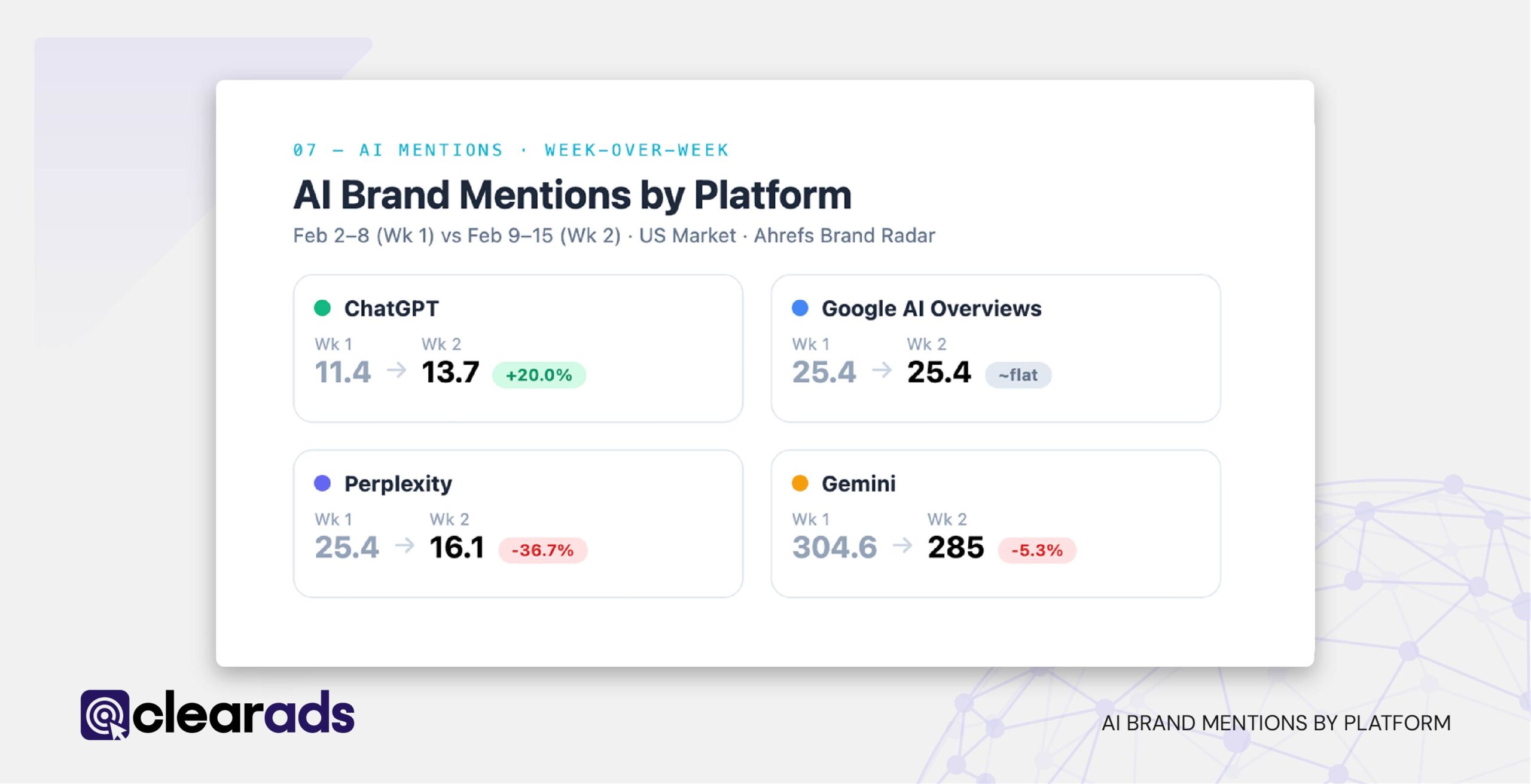
ChatGPT brand impressions went from 129,000 to 146,800 — a 13.5% increase in a single week.
Gemini went from 697,000 to 777,400 — a 12.7% increase, representing nearly 80,000 additional impressions week over week.
What These Numbers Actually Mean
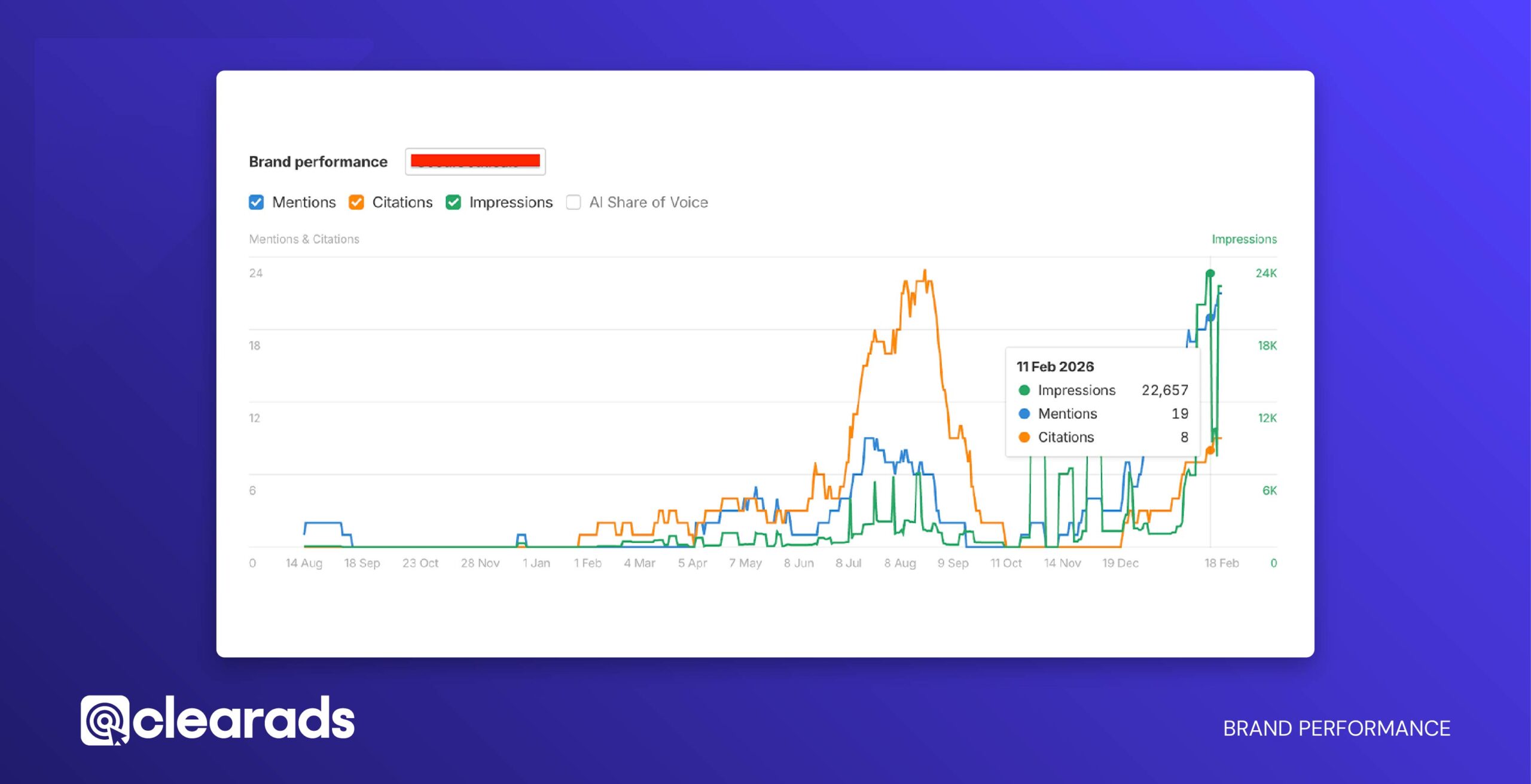
“Brand impressions” in this context measures the estimated search volume of queries where this brand appeared in AI-generated responses. So when someone asks ChatGPT about skincare or beauty products in this category, this brand is showing up 13.5% more often than it was the week before. That’s a meaningful shift — and it happened in seven days.
The Gemini numbers are particularly interesting because Gemini feeds directly into Google’s AI Overviews. More Gemini visibility means more presence right where Google search is heading. For a brand with a DTC site and an Amazon presence, that’s a powerful additional channel.
What About Perplexity and Google AI Overviews?
Perplexity dropped 37.6% and Google AI Overviews dropped 41.2% in the same window. Worth flagging — but not worrying about.
Different platforms index on different timelines. The press release placements hadn’t fully propagated through those systems yet. These numbers reflect where things stood at the two-week mark. As more of those 581 outlets get crawled and indexed, we expect both to recover and climb.
One other number stood out: share of voice on branded queries was 100%. Every single time someone specifically asked about this brand on these platforms, the AI returned a mention. That’s your baseline — and it’s exactly where you want to be.
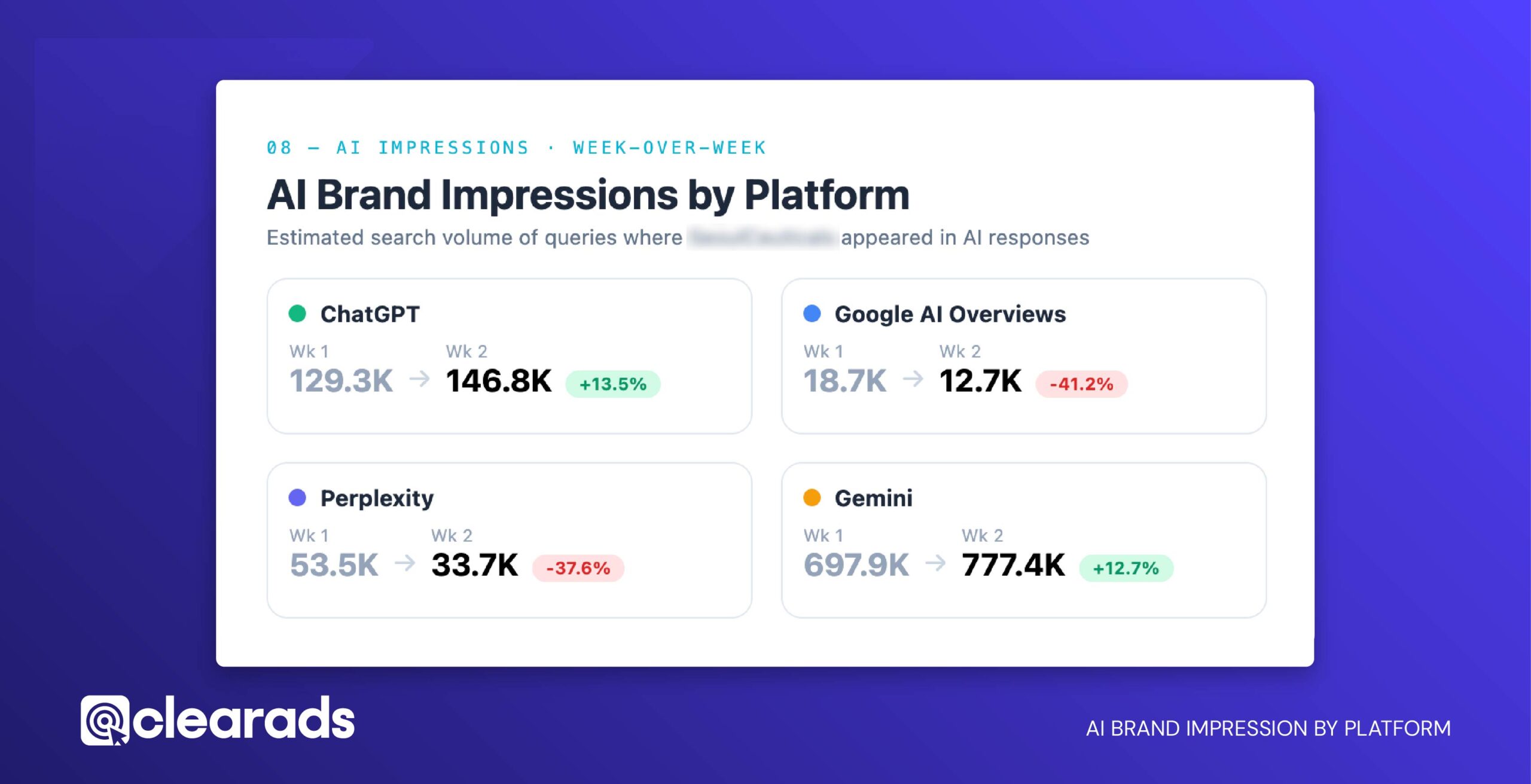
ChatGPT also showed a 20% increase in direct brand mentions compared to the previous week. The AI isn’t just passively aware of the brand. It’s actively recommending it more.
The SEO Bonus Nobody Expected
High-Authority Backlinks as a Side Effect
Here’s something we didn’t fully anticipate going in. The AI visibility was the primary goal. The traditional SEO impact showed up almost as a bonus.
The Ahrefs weekly report flagged two new referring domains — both in the DR 71-100 range. Business Insider at DR 92 and Digital Journal at DR 86.
A DR 92 backlink from Business Insider is the kind of link SEO agencies charge thousands to acquire — if they can get it at all. We got it as a direct byproduct of an AI visibility strategy that most brands haven’t even started thinking about yet.
New Keywords, New Rankings
The keyword data added another layer. Fifteen new keywords appeared in tracking during the first week. One hit position 2 for a 200-monthly-search term. Three landed in positions 4 through 10. Eleven more appeared in positions 11 through 50.
Some of these have real volume behind them. One keyword sitting at position 29 has 19,000 monthly searches. Another at position 48 has 9,800. Not on page one yet — but well within striking distance. A few more authority signals and these move up.
Two Birds, One Press Release
This is the point that changes how you should think about this. The press release strategy isn’t a choice between AI visibility and traditional SEO. It feeds both at the same time. High-authority placements boost your AI platform presence and build the kind of backlinks that improve Google rankings. Two benefits from a single action. That’s not a bad return on one well-placed piece of content.
The 3-Layer AI Visibility Stack (And We’ve Only Done Layer One)
Here’s the part that puts everything above into context.
Everything you’ve just read — the 581 placements, the 13.5% ChatGPT lift, the Business Insider backlink — that’s layer one. We’ve done one thing. And we haven’t touched layer two or layer three yet.
Layer One: Off-Site Authority
This is what we just ran. Press coverage, media placements, brand mentions across the web on high-authority domains. The goal is to build the external signals that tell AI platforms — and Google — that this brand is credible, relevant, and worth surfacing.
It works faster than most people expect. Two weeks is proof of that.
Layer Two: On-Site Optimisation
This is where things get more technical. Schema markup tells AI systems exactly what your brand is, what products you sell, what category you’re in, and what your reviews say. Without it, AI platforms have to guess based on unstructured page content. With it, you’re feeding them organised data they can immediately use.
For this beauty brand, we haven’t done any of this yet. No schema. No structured data. No JSON-LD. The website is essentially invisible to AI systems from a structured data perspective. And we’re already seeing these lifts.
What Happens When We Add Schema?
When we mark up every product, implement review schema, add FAQ markup that feeds directly into how AI platforms answer skincare questions — and optimise the entire site architecture so Gemini, ChatGPT, and Perplexity can crawl it properly — the signals compound. Layer two makes layer one more credible. The AI systems have more to work with, and they use it.
Layer Three: Ongoing Content and Engagement
This is the compounding layer. Regular content updates. New press releases as the brand launches products. Blog content written in formats that AI platforms can read and reference easily. Each piece adds another signal. Another mention. Another data point for AI systems to draw on when they answer a question about the category.
Individually, none of these layers are magic. Together, stacked over six to twelve months, they make a brand the default answer when an AI is asked about its category. That’s the position worth chasing.
What Two Weeks Proved
We went in expecting a slow build. Months before anything meaningful showed up. That’s not what happened.
ChatGPT noticed in two weeks. Gemini noticed in two weeks. Yahoo Finance and Business Insider are now linking back to a beauty brand that most people in the SEO world would have told you to “just focus on Google rankings” for.
And we haven’t started the real work yet.
The brands that build AI visibility now won’t just get ahead of their competitors. They’ll become the answer — the name AI platforms reach for when someone asks “what’s the best product in this category?” The brands that wait will spend the next two years wondering why their traffic is sliding even though their Google rankings look fine.
The window is open. It won’t stay that way.
Ready to Build Your AI Search Presence?
Everything in this case study — the 581 placements, the Yahoo Finance feature, ChatGPT up 13.5% — came from layer one. One press release. No schema. No on-site work. No structured data.
We’re opening our AI search programme to five brands. Five, because this is hands-on work. We build the authority signals, the schema markup, and the content strategy properly — and that takes real attention, not a template.
If you want your brand to be the name AI platforms reach for when someone asks about your category, get in touch with the Clearads team and let’s talk about what that looks like for you.